Tuesday, 29 March 2022

Woodpecker madness

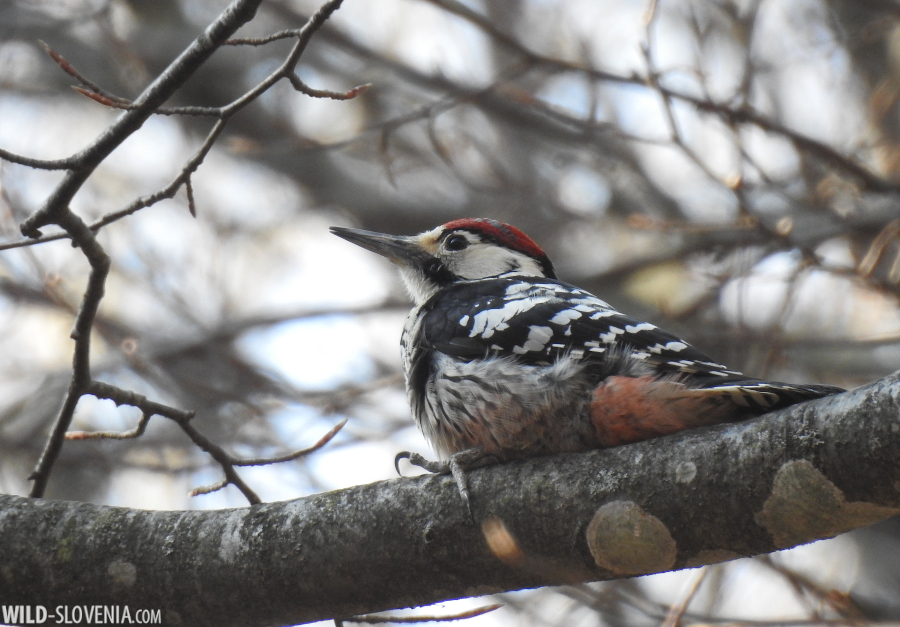
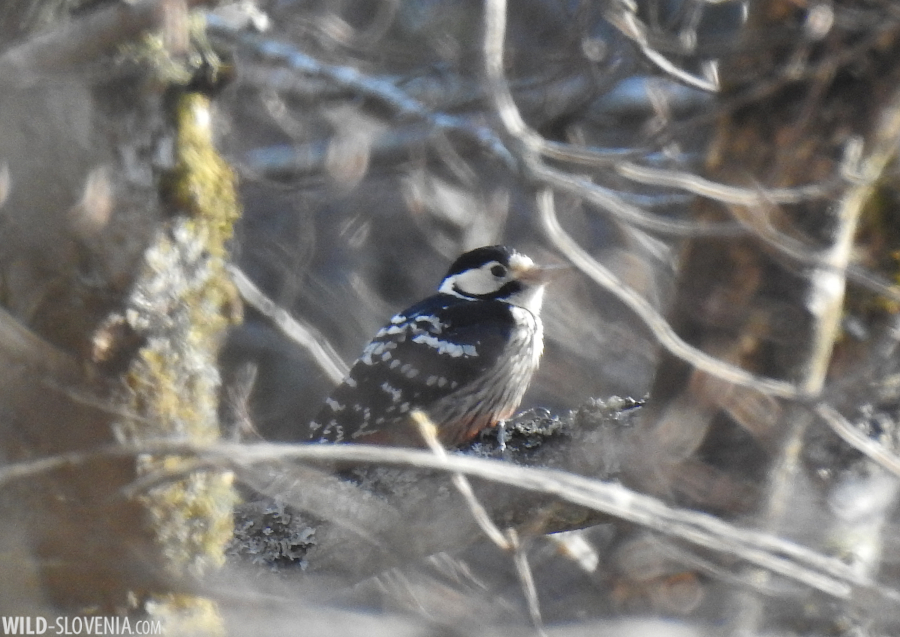
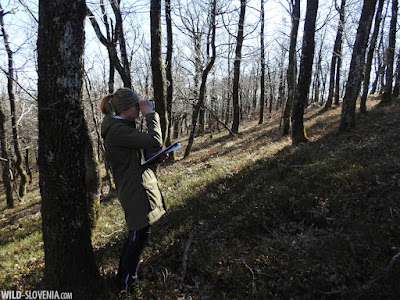
It's woodpecker madness out there in the woods! Most species of picids are extremely territorial at this time of year, so this is also the best time to census them. In the last two weeks we spent most of our early mornings in the forest: either in the Karst's oak woodlands or higher up in the Dinaric beech forests on Snežnik's plateau (all pretty much as usual, we would say). In the forests of Snežnik we surveyed territories of the rare "Lilford's" White-backed Woodpecker Dendrocopos leucotos lilfordi, whose Slovenian population is estimated at only 100-150 breeding pairs. Mid to late March is the best time to locate breeding pairs as these woodpeckers drum quite intensively and it is also much easier to find them now than in other seasons. We were successfull in finding 6 White-backs (3 territories) so far, mostly in commercial forest habitats. The higher terrains (above 1300 m) with old-growth or almost natural forest are still laden with snow and that makes walking quite difficult. We'll need to wait a bit more to survey those areas in late April. Mount Snežnik translates as "the snowy mountain" for a good reason!

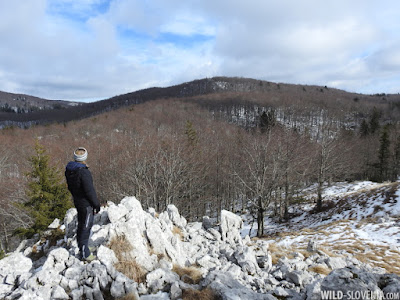
Snowy summit of mount Snežnik (1796 metres a.s.l.).
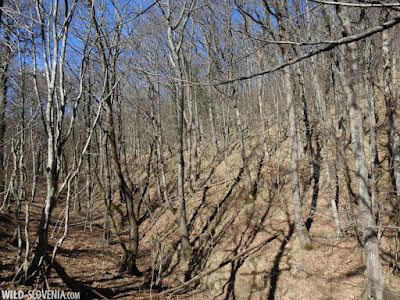
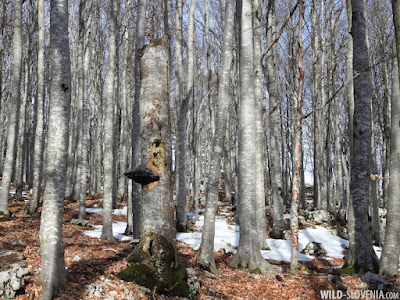
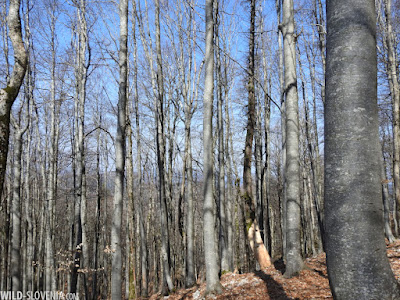
Mountain beech forest on rugged limestone terrain.
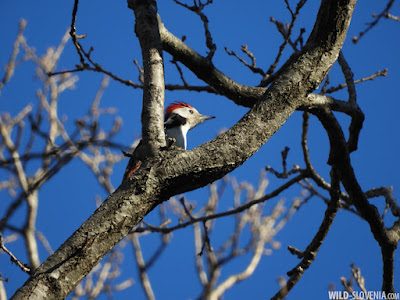
White-backed Woodpecker Dendrocopos leucotos lilfordi - male.
White-backed Woodpecker Dendrocopos leucotos lilfordi - female.
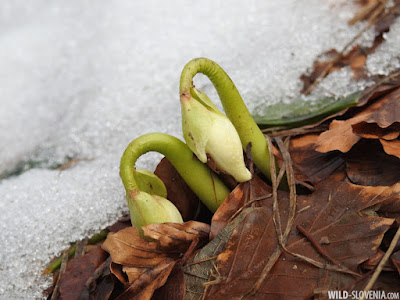
The beginning of something extraordinary.
Fresh wood chips on the ground often reveal the site of a new nesting cavity.
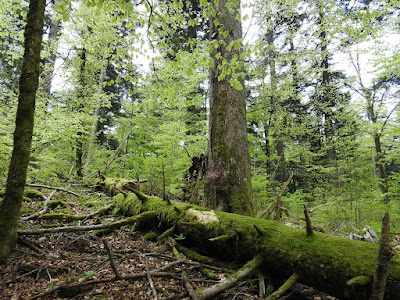
Standing dead beech trees - perfect nesting habitats for woodpeckers.

White-backed Woodpecker Dendrocopos leucotos lilfordi - male drumming

 
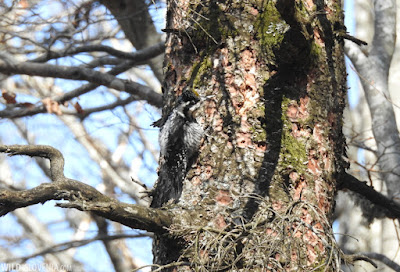
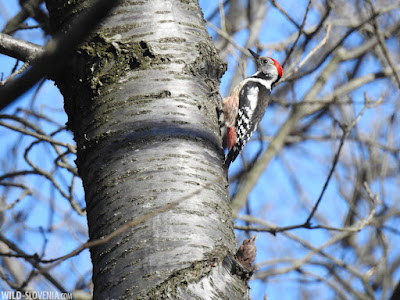
While tracking a female White-backed Woodpecker on a steep slope, we were distracted by a rather characteristic knocking on a tree, coming from another direction. In the predominat beech forest we immediately spotted a decaying silver fir Abies alba, whose pieces of bark were magically falling off at regular intervals. As expected, on the other side of the tree was hiding a stunning male Three-toed Woodpecker Picoides tridactylus, which was removing pieces of bark and feeding intensively. It allowed good and close views, before being chased off by the White-backed Woodpecker that was still around. Although the two species have different habitat requirements (White-back = beech specialist & Three-toed = conifer specialist), they can be sometimes found sharing the same habitat, where dead wood of both coniferous and deciduous trees is found. In the Dinaric forests this is usually the case with natural, higher-altitude beech forests containing also dead or dying silver firs. Other commoner birds encountered on a regular basis in these forests were Grey-headed Picus canus, Black Dryocopus martius and Great Spotted Woodpecker Dendrocopos major, Eurasian Treecreeper Certhia familiaris, Willow Poecile montanus, Crested Lophophanes cristatus and sometimes Marsh Tit Poecile palustris, Crossbill Loxia curvirostra, Goldcrest Regulus regulus and several others.
An isolated dead silver fir Abies alba in the beech forest reveals a...
...male Three-toed Woodpecker Picoides tridactylus.
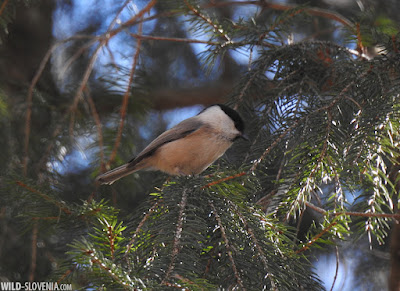
Willow Tit Poecile montanus
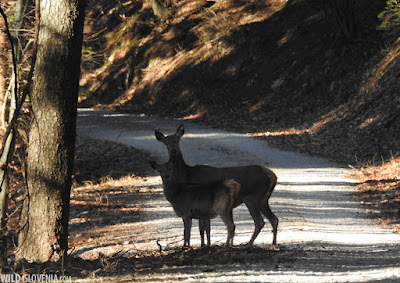
Red Deer Cervus elaphus
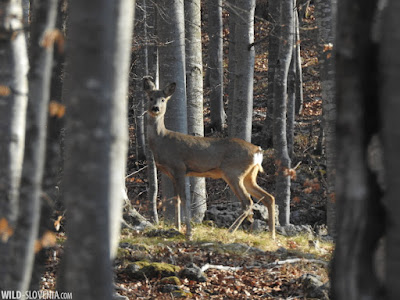
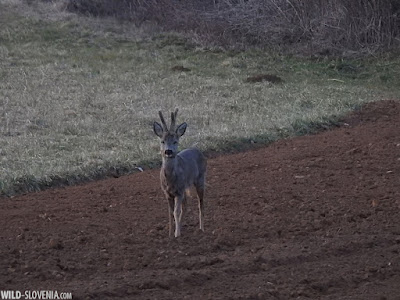
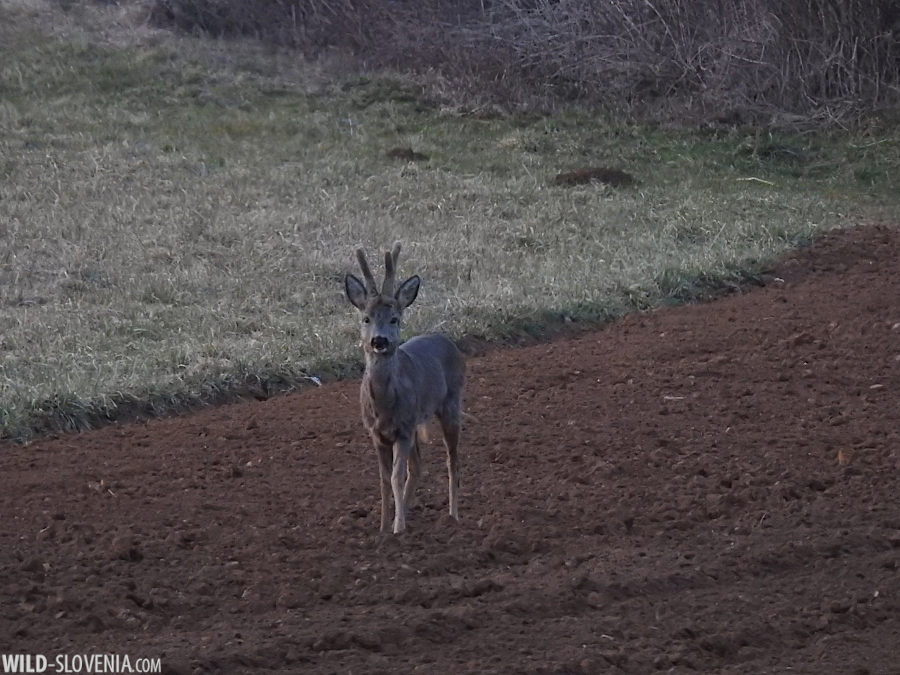
Roe Deer Capreolus capreolus hiding in the forest during the day...
...and descending to the valleys to feed in the fields at twilight.

Meanwhile, lower down in the "classical" Karst, we have been censusing another forest specialist for the purposes of our ongoing study - the Middle Spotted Woodpecker Leiopicus medius. In our study area (roughly 10 km2) of mature oak woodland we counted 13-14 territories - a relatively good density considering the rarity of the species, until a decade ago. On every census point we also recorded a nice variety of other picids, confirming that these woods offer some excellent habitat to primary and secondary cavity nesters. Grey-headed Picus canus & Great Spotted Woodpeckers Dendrocopos major were particularly common, while slightly less common was the presence of Lesser Spotted Dryobates minor, Green Picus viridis and Black Woodpeckers Dryocopus martius. The mature oak-beech woodlands are now alive also with the songs of common songbirds, including Song Thrushes Turdus philomelos, now present back en masse. Among the other species it's always interesting to note the simultaneous presence of both Short-toed Certhia brachydactyla and Eurasian Treecreeper Certhia familiaris, the latter being scarcer and preferring cooler beech stands. Also nice was a brief encounter with one of our local Ural Owls Strix uralensis, hunting along a forest road. Despite the great drought (the last weak rain was sometime in early February), the woodland nemoral flora is emerging at last. Especially nice to see are carpets of Dog's-tooth Violet Erythronium dens-canis & Hacquetia Hacquetia epipactis in densities difficult to find elsewhere in Slovenia.

Middle Spotted Woodpecker Leiopicus medius
Habitat of Middle Spotted Woodpecker on the eastern edge of the Karst.
Habitat tree - an old oak Quercus petraea with multiple cavities of Middle Spotted Woodpecker.
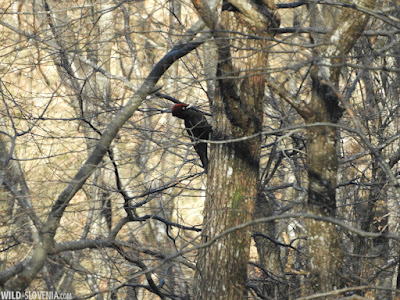
Black Woodpecker Dryocopus martius - male.
Typical silhouette of a Ural Owl Strix uralensis
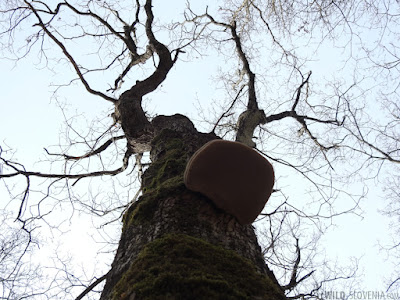
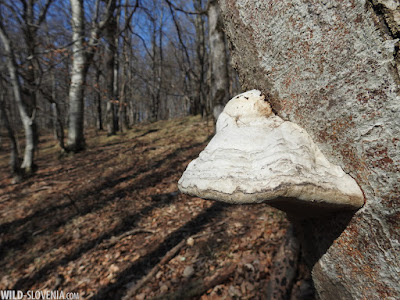
Tinder Fungus Fomes fomentarius on beech Fagus sylvatica.
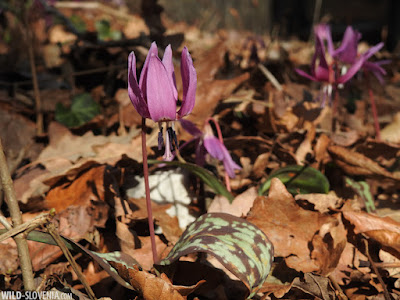
Dog's-tooth Violet Erythronium dens-canis (in early morning shade & midday sunshine).
Hacquetia Hacquetia epipactis
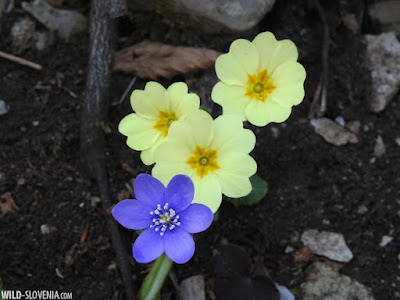
Hepatica Hepatica nobilis & Primrose Primula vulgaris


In March we also made short visits to the wider area of Škocjanske jame (Škocjan caves) and the river Reka. Due to the persistent drought, the water levels of the river were worryingly low. We wanted to check on the breeding progress of Dippers Cinclus cinclus (1-2 pairs along this stretch of river) but the birds were nowhere to be found in their usual territories. They probably moved upstream where water levels might be a little more suitable. However we were amazed to find a pair of migrant Green Sandpipers Tringa ochropus on the river instead, while the local Grey Wagtails Motacilla cinerea were also around in good numbers. One evening, as we were listening for a local pair of Eagle Owls Bubo bubo we also heard several Night Herons Nycticorax nycticorax migrating above the river. The rich, deep soil in the Reka river valley also offers excellent conditions for a varied nemoral flora that was in full bloom at the time of our visits.
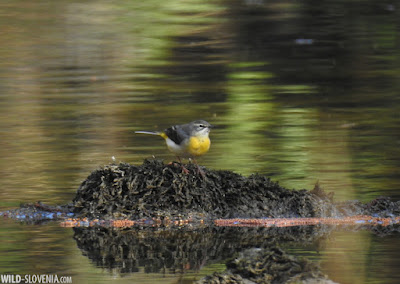
Grey Wagtail Motacilla cinerea
Green Sandpiper Tringa ochropus stopping on the river Reka during migration.
Song Thrush Turdus philomelos
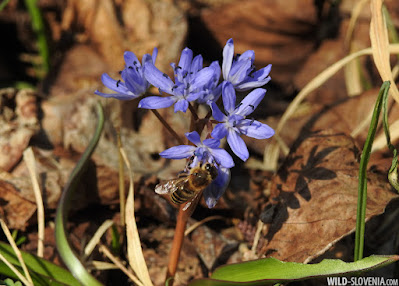
Alpine Squill Scilla bifolia visited by Honeybee Apis mellifera
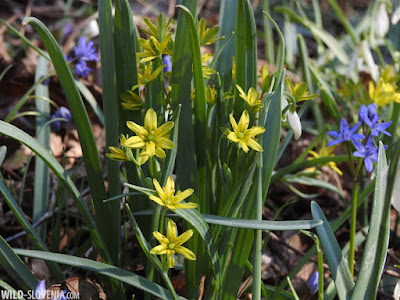
Yellow Star-of-Betlehem Gagea lutea
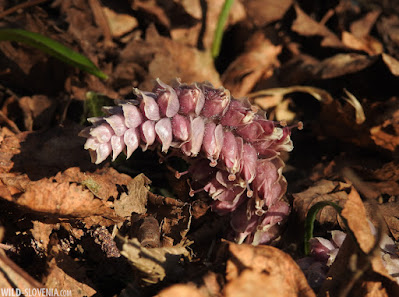
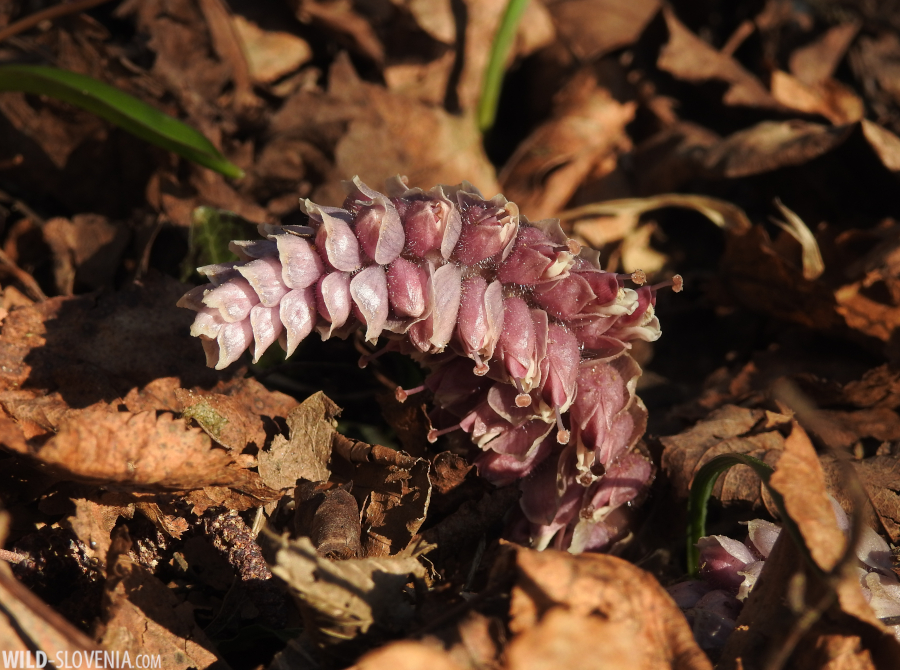
Toothwort Lathraea squamaria
Rue-leaved Isopyrum Isopyrum thalictroides
Solid-tubered Corydalis Corydalis solida
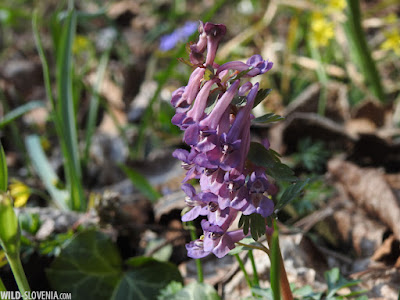
Bulbous Corydalis Corydalis cava (bulbosa)
White Violet Viola alba
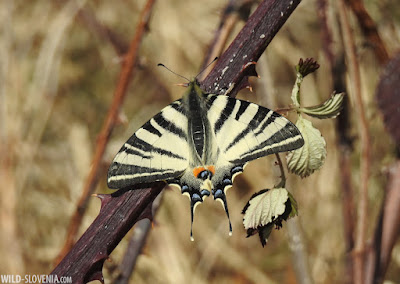
Scarce Swallowtail Iphiclides podalirius
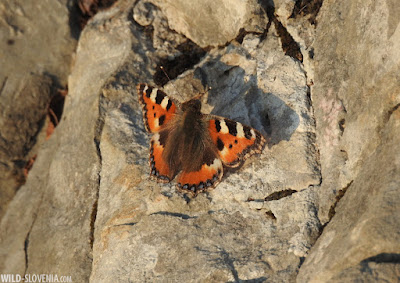
Small Tortoiseshell Aglais urticae

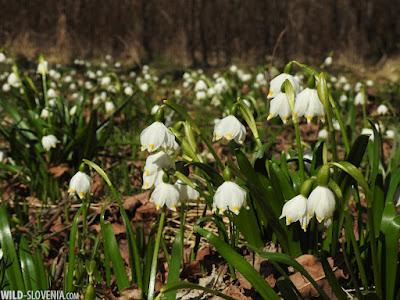
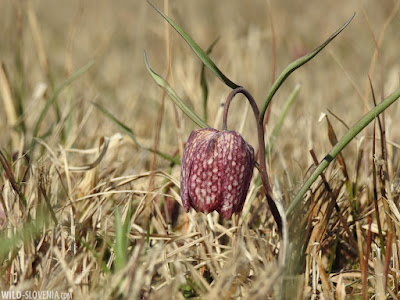
Last week, in between work commitments, we also made a brief visit to the alluvial forests and wet meadows just south of Ljubljana (the area known as Ljubljansko barje). Woodpeckers were again the main protagonists, but this time in a completely different environment from what we're usually used to. Black Woodpecker Dryocopus martius (video) and Grey-headed Woodpecker Picus canus showed really well, while there were also two "mewing" Middle Spotted Woodpeckers Leiopicus medius around. Also here the species is a relatively recent coloniser and can be now observed even in larger parks in the capital. Although we were a bit early for this (actually only one or two days!), we nevertheless enjoyed the spring flora, including carpets of Spring Snowflake Leucojum vernum and the rare Snake's-head Fritillary Fritillaria meleagris, a plant growing on wet meadows and alluvial forests at only a few localities in the whole of Slovenia.
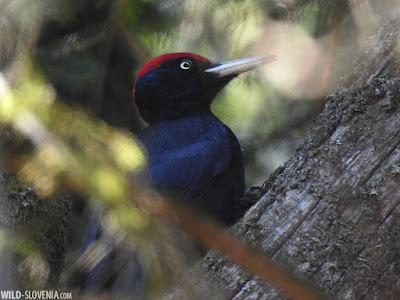
Black Woodpecker Dryocopus martius - male
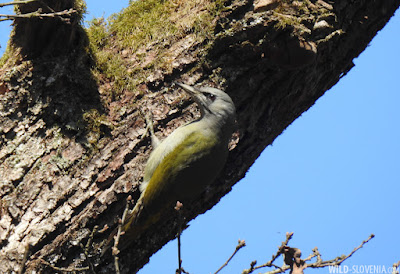
Grey-headed Woodpecker Picus canus - female
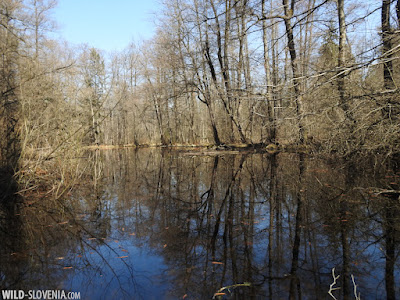
Alluvial forest with pedunculate oak Quercus robur and alder Alnus glutinosa.
Spring Snowflake Leucojum vernum
Snake's-head Fritillary Fritillaria meleagris


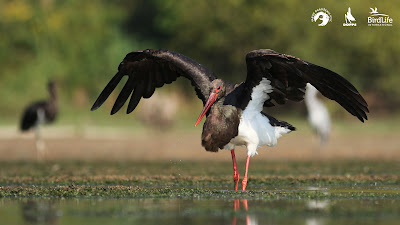
In the free time we've been also checking our other local rare birds, including the occupied territories of our Eagle Owls Bubo bubo as well as one of the only two nesting Black Storks Ciconia nigra in western Slovenia. On the 20th of March we were very glad to spot the returning pair of storks, soaring above their territory. Five days later we were also watching our local pair of Short-toed Eagles Circaetus gallicus that has probably just returned from Africa. One afternoon, during a short session of raptor watching we also observed a Red Kite Milvus milvus migrating near Sežana (annual rarity in Slovenia), as well as one of the local Goshawks Accipiter gentilis. Now we're just waiting for the big boom of summer migrants returning in the next weeks!
Black Stork Ciconia nigra above its breeding territory at midday.
Short-toed Eagle Circaetus gallicus - pair flying in tandem.
Red Kite Milvus milvus - an annual rarity in Slovenia.

Thursday, 17 March 2022

HELP US RETURN THE FOREST TO NATURE!

Slovenia ranks among the three most forested countries in Europe. But despite boasting a large area covered by trees (around 60% of the country) and being renowned for its exemplary model of close-to-nature forestry, less than 1% of the old, natural forests remain, mostly within a scatter of small forest reserves. Old forests are a key habitat for the survival of many important animal species, which can only be conserved through decisive action.  

Old natural forests represent less than 1% of all the forest in Slovenia.

For this reason, we at DOPPS, Slovenia’s BirdLife International partner, have launched a campaign in which everyone can participate, helping us preserve our natural forests and the species that depend upon them, for future generations.
In the last decade Slovenia has witnessed an intensification in forest management. According to the Slovenian Forest Service, since 2004, on average, more than 400 km of new forest roads used to harvest timber, are being laid every year. As a result, by opening up forests, we are losing old, natural growth and untouched stands, while there is no strategy aimed at replacing these losses with new forest areas left to nature. Old, natural growth forests, characterized by large volumes of dead wood, are formed over long periods of 50 to 100 years, and offer shelter to many valuable forest organisms we term “forest specialists”. These include many species of birds, the populations of which are already severely depleted. To conserve them we must act immediately to establish new forest reserves or areas excluded from human activities and exploitation, which would then be left to evolve naturally.

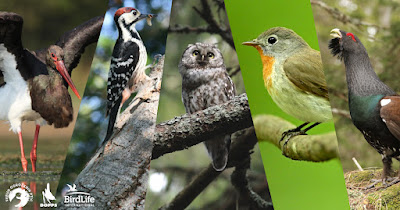
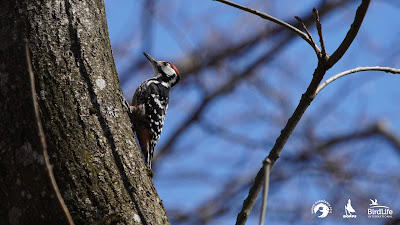
White-backed Woodpecker Dendrocopos leucotos lilfordi
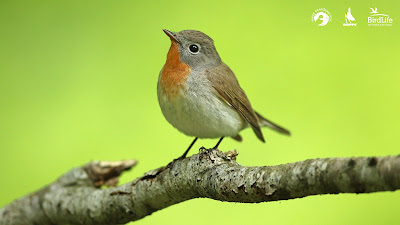
Red-breasted Flycatcher Ficedula parva
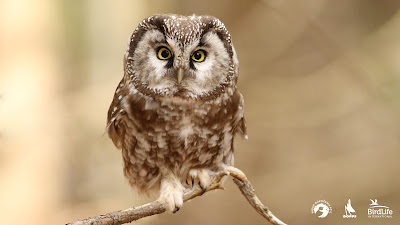
Tengmalm's Owl Aegolius funereus
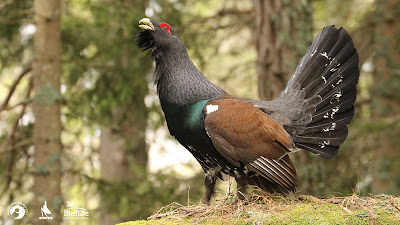
Capercaillie Tetrao urogallus
Black Stork Ciconia nigra
 

Within the Guardians of the Natural Forests project we are seeking the help of generous donors to raise funds for the purchase of at least 10 hectares of forest, which will be returned to nature. We won’t interfere in this forest, but will let nature take its course. With this, we want to start increasing the share of natural forests, which are severely lacking in the official network of protected areas. In doing so we will be preserving forest specialists such as the White-backed Woodpecker, Tengmalm’s Owl, Black Stork, Capercaillie and Red-breasted Flycatcher, as well as many other forest organisms.

How you can help? Visit www.gozdnispecialisti.si and make a donation! Also spread the word about the campaign & invite friends to donate. Thanks!

MAKE A DONATION

Tuesday, 8 March 2022

Late winter in the Karst & Dinarides

Field activity has been quite slow in the past weeks, due to unfavourable weather (rather cold and wintry) and lots of work to do. But despite this we still managed to get out here and there, although mostly locally. The greatest emphasis has been on surveying the habitat of Middle Spotted Woodpecker Leiopicus medius here in the Karst near Sežana, for Sara's study on the species. In late February the oak woodlands were already coming alive with woodpeckers' drummings and the odd "mewing" calls of Middle Spots - the time we've been waiting for so long - woodpecker season! A commonly heard species in early March is also Black Woodpecker Dryocopus martius, with its loud drummings. Locally there were also Lesser Spotted Woodpecker Dryobates minor and Grey-headed Woodpecker Picus canus to keep us entertained. Thrushes also began to sing; in the cooler woodlands mostly Mistle Thrushes Turdus viscivorus, followed by Blackbirds Turdus merula and a few days ago also the first returning Song Thrushes Turdus philomelos

The woodland flora seems a bit slow this year due to the absence of rain. Snowdrops Galanthus nivalis and Primroses Primula vulgaris are locally abundant, but we'll still need to wait for the proper blooms of such beauties as Dog's-tooth Violet Erythronium dens-canis & Hacquetia Hacquetia epipactis. As we didn't manage to take any decent pics of birds, here is some material from the archive.

Middle Spotted Woodpecker Leiopicus medius

Middle Spotted Woodpecker Leiopicus medius - mewing calls.

Black Woodpecker Dryocopus martius - territorial drumming.
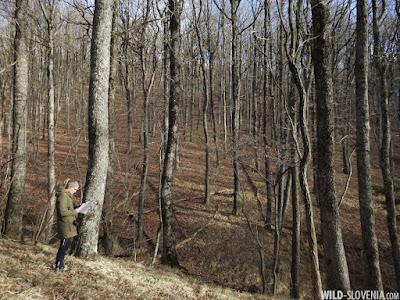
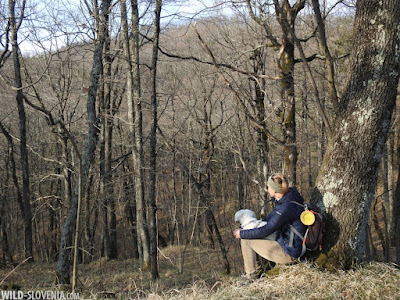
Surveying Middle Spotted Woodpecker's habitat in the Karst.
A tranquil afternoon stroll in the oak woodlands...
...followed by crawling through a Wild Boar's "bramble tunnel".
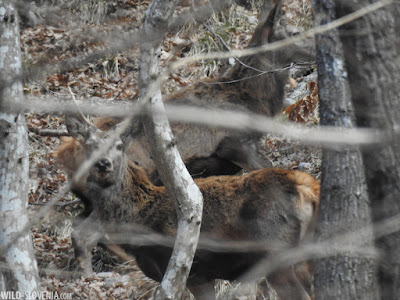
Red Deer Cervus elaphus - young males.
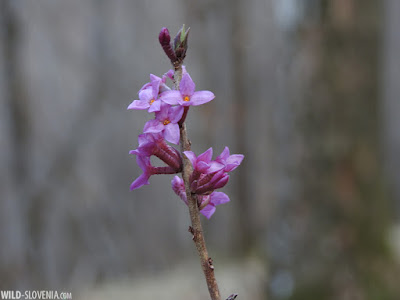
Mezereon Daphne mezereum
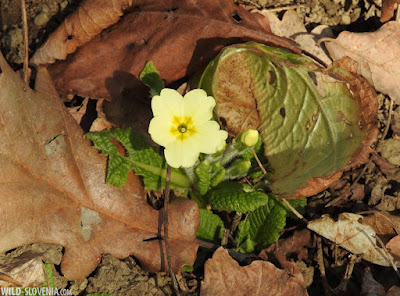
Primrose Primula vulgaris
Scarlet Elf Cup Sarcoscypha austriaca/coccinea
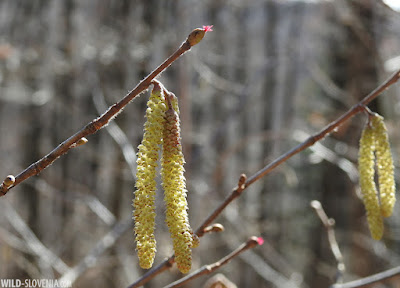
Hazel Corylus avellana - catkins & female flowers.
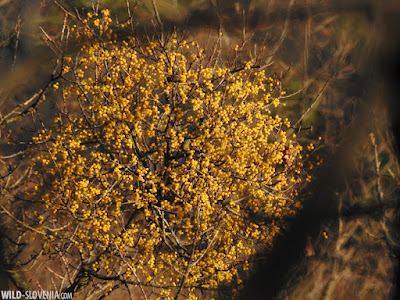
Yellow-berried Mistletoe Loranthus europaeus
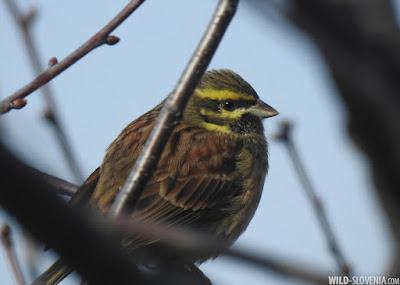
Cirl Bunting Emberiza cirlus holding territory on the tree in front of our bedroom.


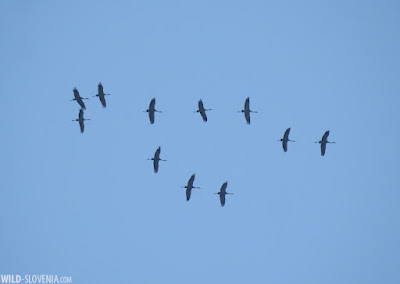
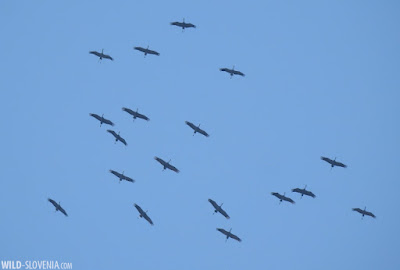
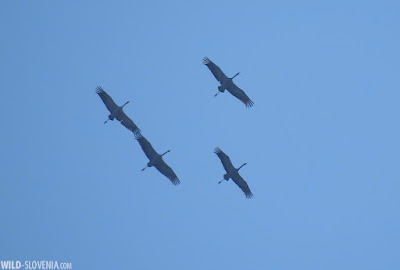
Meanwhile the northward migration of Common Cranes Grus grus is getting more and more spectacular every coming year. In the last days of February some huge flocks migrated through Slovenia on single "passage days", while smaller flocks have been still reported in the last couple of days. Perhaps the most notable was a flock of around 2000 individuals that entered western Slovenia somewhere around Gorica, after it left the Friuli plains in northeastern Italy on the 22nd of February. We've been lucky to catch up several smaller flocks both in the Karst (usually right above the house) and at Škocjanski zatok Nature Reserve. Check this amazing video (with sound on!) of a large flock that stopped briefly at lake Cerknica.

Common Crane Grus grus
 

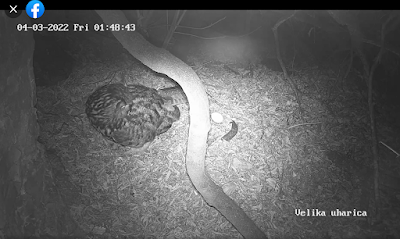
Early March is also a prime time to listen for singing Eagle Owls Bubo bubo. Last weekend we attendend DOPPS' traditional Eagle Owl census in SW Slovenia and despite rather terrible weather conditions (strong & cold northeasterly), we managed to confirm the presence of our local pair near Sežana - the male was hooting in the evening. The group census, like every year, attracted a large number of people: around 160 volunteers attended the event and divided in smaller groups, counted a total of 14 Eagle Owl territories, mostly in the Karst area. After the census, my colleague and Eagle Owl expert Tomaž Mihelič gave a talk on the species' ecology & conservation. He presented some interesting results from a GPS telemetry study he is carrying on in the Karst (see post). On the front of Slovenian Eagle Owls there's a lot going on lately, including the two live cameras on the species' official website. The first cam is active, but the female hasn't started to lay eggs yet (although last year's infertile egg is still in the nest & visible), while the second cam has some connection problems and should be fixed soon. If all goes well, in a few weeks both cameras should be streaming live Eagle Owl nesting activity, so keep tuned!
Eagle Owl Bubo bubo

Snapshot from the live camera. Full video here.

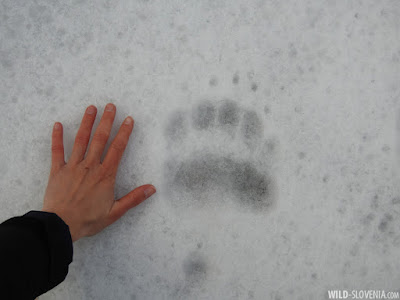
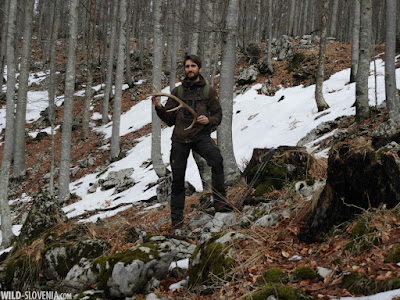
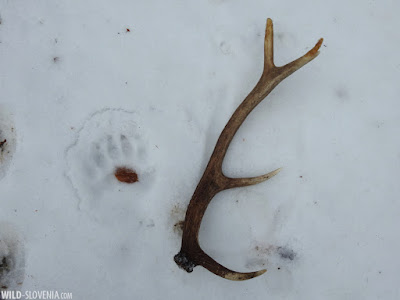
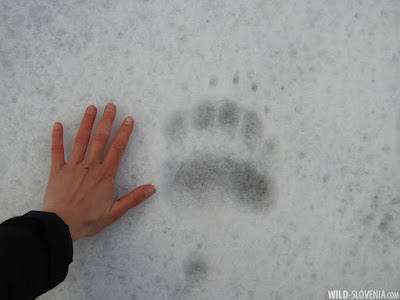
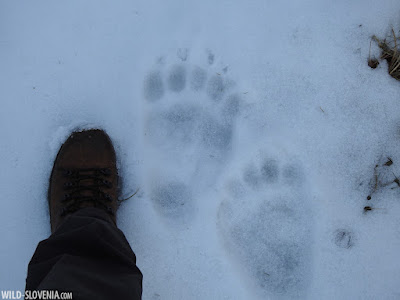
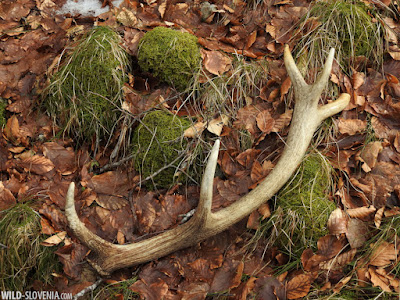
Although we're currently under the influence of a cold front that brought some fresh snow to the mountains, in the last days of February we still managed to visit the Snežnik plateau, as roads were mostly snow-free. White-backed Woodpeckers Dendrocopos leucotos lilfordi have been already territorially active (drumming), but proved rather elusive (hence, also here some archive material). Nevertheless we took the chance to visit some old nesting trees and record some habitat parameters. Also in these higher-altitude forests Black Woodpeckers were drumming insistently. Apart from that and a few singing Mistle Thrushes, the situation was still very wintry. Despite this, Brown Bears Ursus arctos seem to be already pretty active as we came across several footprints in the snow, including a long track of a very large individual (probably a male). However in Slovenia, bears regularly wander around in winter and don't usually hibernate throughout the cold season, like farther north. On the "mammal tracks & signs" front it was also nice to find an old Red Deer's antler - soon the stags will start to shed their fresh antlers & finds like this will be even more exciting!

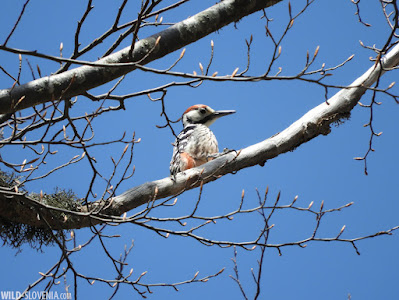
White-backed Woodpecker Dendrocopos leucotos lilfordi

White-backed Woodpecker Dendrocopos leucotos lilfordi - male drumming.

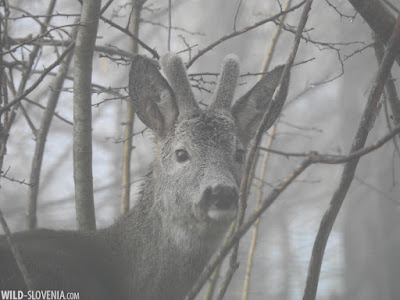
Roe Deer Capreolus capreolus buck in velvet.
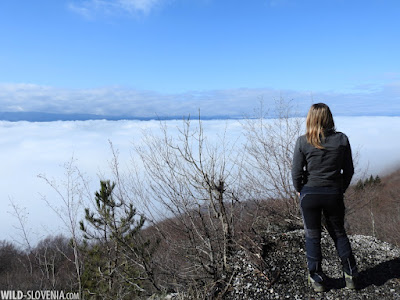
Rising up on Snežnik's plateau...
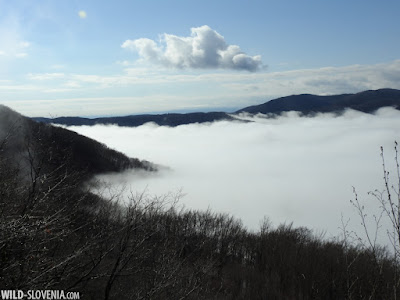
...and abandoning the foggy valley below.
Dead wood in White-backed Woodpecker's habitat.
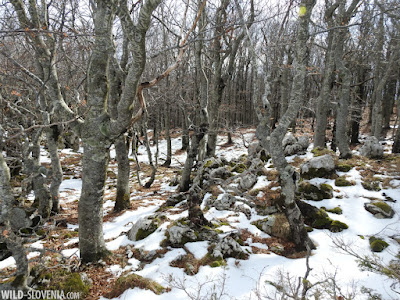
Contorted beech Fagus sylvatica in the sub-alpine forest belt.
Wild corners of the Snežnik's plateau.
I'm getting rather good at this new hobby of mine...
Red Deer's Cervus elaphus old antler.
Forest still life.
Footprints of a large Brown Bear Ursus arctos.
Christmas Rose Helleborus niger is still emerging from the snow at higher altitudes.
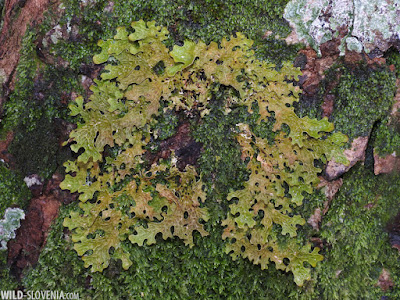
Tree Lungwort Lobaria pulmonaria coming to life with moisture from a recent rain.