

After a week in the Julian Alps our cameras are full of photographs and our notebooks full of observations. In this long post we will present a mixture of wildlife encountered in different areas of the Julian Alps (including the Triglav National Park) in north-west Slovenia. The first part of our "holidays" was spent in the Gorenjska region, doing some exploration for future trips, while in the second part we attended our yearly biologist's summer camp in the Bavšica valley near Bovec. The photographs follow a (more or less) chronological order and have only short captions, without too much explanation. The selection is long, so we'll let the photos speak...


Gentiana pannonica, Pokljuka plateau (Triglav National Park).

Conifer forest and mount Veliki Draški vrh (2243 m), Pokljuka plateau (Triglav National Park).

Three-toed Woodpecker Picoides tridactylus, Pokljuka plateau (Triglav National Park).
We stumbled upon this female, as well as another female a few days later in the Vrata valley. Both observations were casual and unexpected.

A steep forest slope in the Vrata valley (Triglav National Park) where Norway spruce Picea abies has been affected by bark beetle (see different infection stages). A prime Three-toed Woodpecker habitat!

Campanula cespitosa, Pokljuka plateau (Triglav National Park).
One of the commonest flowers encountered in the Alps at this time of year.
One of the commonest flowers encountered in the Alps at this time of year.

Epipactis helleborine, Pokljuka plateau (Triglav National Park).

Gentiana asclepiadea, Blejski Vintgar - Vintgar gorge (Triglav National Park).

Centaurea carniolica, Blejski Vintgar - Vintgar gorge (Triglav National Park).

View from mount Slatnik (1600 m) to the west over mounts Šavnik, Kobla and Črna prst (south of Bohinj).

Dianthus barbatus, Mt. Slatnik.

Scorzonera rosea, Mt. Slatnik.

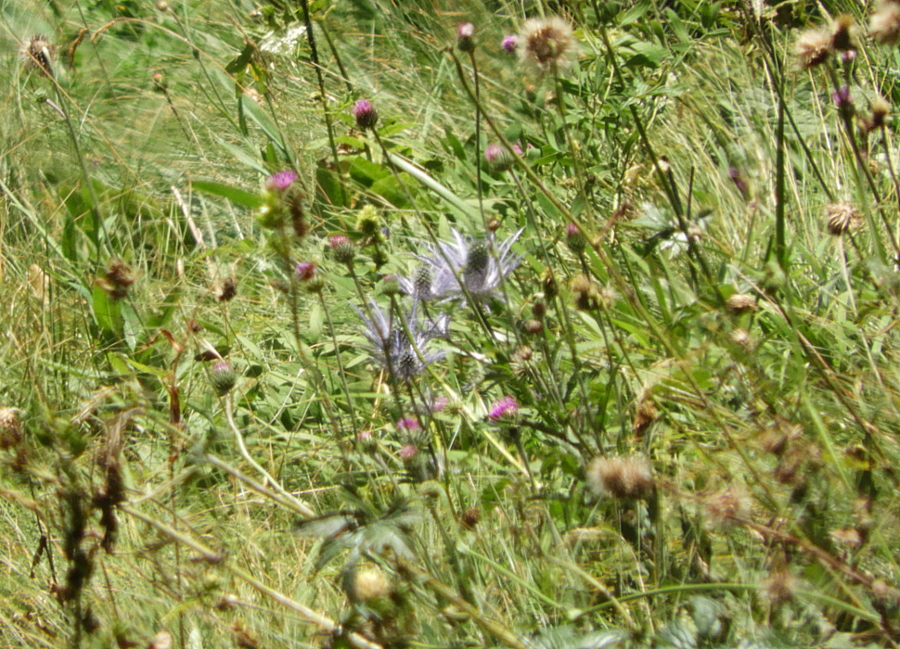
Queen of the Alps Eryngium alpinum in a steep ravine on mount Šavnik (1574 m).
About 10 specimen of this very rare flower were in bloom at the site. Unfortunately it was impossible to get closer, hence the record shots.
About 10 specimen of this very rare flower were in bloom at the site. Unfortunately it was impossible to get closer, hence the record shots.

Water Ringlet Erebia pronoe, Mt. Slatnik.
This was the commonest ringlet species encountered in the Alps.


Campanula thyrsoides, Mt. Slatnik and Bohinjsko sedlo.

Linum viscosum, Mt. Slatnik.

Centaurea haynaldii ssp. julica, Mt. Šavnik.
Endemic of the Southeastern Alps.
 Streptopus amplexifolius, Mt. Slatnik.
Endemic of the Southeastern Alps.


Crossbill Loxia curvirostra, Mt. Slatnik.

Mt. Šavnik (1574 m) and the Triglav mountain range in the back.


The impressive Peričnik waterfall in the Vrata valley (Triglav National Park). With its 52 meters it's one of the most famous waterfalls in Slovenia.


Mount Triglav (2864 m) is Slovenia's highest peak and its northern wall, standing 1000 m tall, is the most impressive cliff in the Julian Alps. Both pics were taken in the Vrata valley (Triglav National Park).
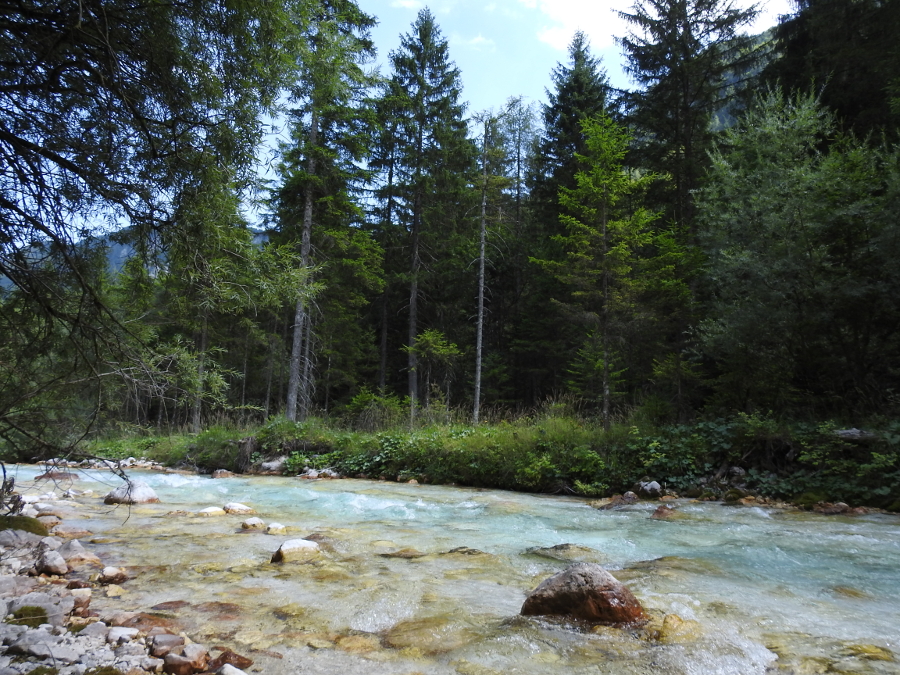
Triglavska Bistrica, a very cold mountain stream originating under Triglav's northern wall and flowing through the Vrata valley (Triglav National Park).

Dipper Cinclus cinclus, Radovna river (Triglav National Park).


Majestic mountain views above the Vrata valley (Triglav National Park).


Chalk-hill Blue Lysandra (Polyommatus) coridon, Vrata valley and Montasio plateau.
The commonest buttefly in the Alps at the moment.


Large Ringlet Erebia euryale, Pokljuka plateau (Triglav National Park).

Mount Mangrt (2679 m) in the western Julian Alps, on the border with Italy.

Leontopodium alpinum, Mt. Mangrt (Triglav National Park).

Campanula zoysii, Mt. Mangrt (Triglav National Park).
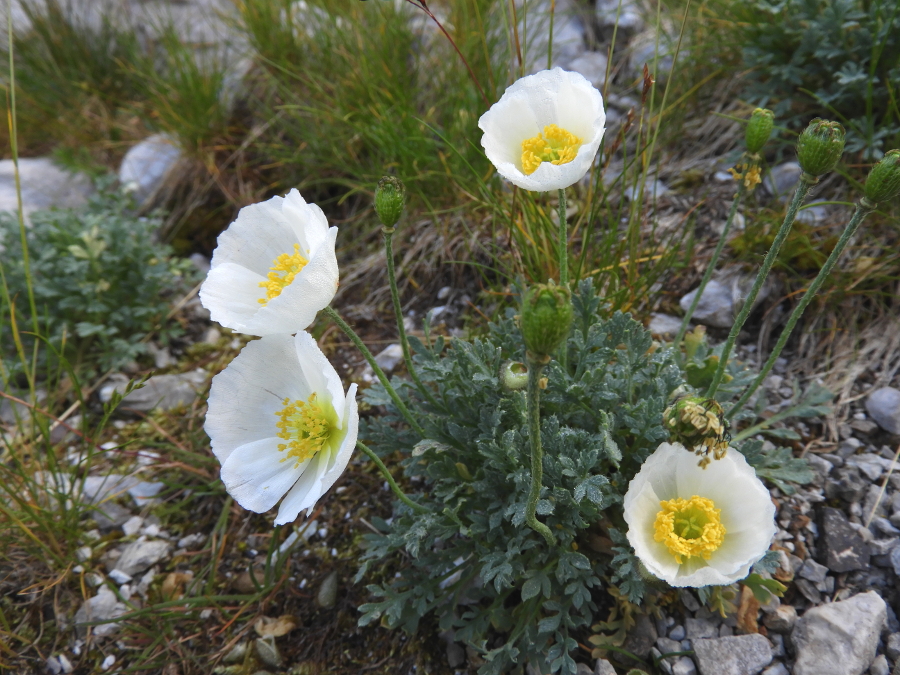
Papaver alpinum ssp. ernesti-mayeri, Mt. Mangrt (Triglav National Park).
Endemic poppy of the Julian Alps.

Physoplexis comosa, Mt. Mangrt (Triglav National Park).

Campanula cochlearifoliia & Saxifraga squarrosa, Mt. Mangrt (Triglav National Park).

Potentilla nitida, Mt. Mangrt (Triglav National Park).

Omalotheca hoppeana (Gnaphalium hoppeanum), Mt. Mangrt (Triglav National Park).

Bupleurum petraeum, Mt. Mangrt (Triglav National Park).

Shepherd's Fritillary Boloria pales, Mt. Mangrt (Triglav National Park).

Alpine Swift Apus melba, Mt. Mangrt (Triglav National Park).
Other Alpine birds observed on Mangrt were Snowfinch Montifringilla nivalis, Alpine Chough Pyrrhocorax graculus, Alpine Accentor Prunella collaris, Rock Thrush Monticola saxatilis and Water Pipit Anthus spinoletta.
Other Alpine birds observed on Mangrt were Snowfinch Montifringilla nivalis, Alpine Chough Pyrrhocorax graculus, Alpine Accentor Prunella collaris, Rock Thrush Monticola saxatilis and Water Pipit Anthus spinoletta.

Altopiano del Montasio (Planina pod Montažem) in north-east Italy, close to the border with Slovenia.

Alpine Marmot Marmota marmota, Altopiano del Montasio (NE Italy).
We saw tens of these on Montasio, as well as on Mt. Mangrt and elsewhere near Bohinj.
We saw tens of these on Montasio, as well as on Mt. Mangrt and elsewhere near Bohinj.


Alpine Ibex Capra ibex, Altopiano del Montasio (NE Italy).
This fabulous male allowed excellent and close views, whilst feeding on a scree slope. A bachelor group of +20 males was also seen on a distant mountain slope as well as several females with lambs.
This fabulous male allowed excellent and close views, whilst feeding on a scree slope. A bachelor group of +20 males was also seen on a distant mountain slope as well as several females with lambs.

Linaria alpina, Altopiano del Montasio (NE Italy).


Golden Eagle Aquila chrysaetos, Altopiano del Montasio (NE Italy).
Two individuals were observed.
Two individuals were observed.

Rock Thrush Monticola saxatilis (immature), Altopiano del Montasio (NE Italy).

Alpine Chough Pyrrhocorax graculus, Altopiano del Montasio (NE Italy).

Cuckoo Cuculus canorus, Altopiano del Montasio (NE Italy).
This adult male stopped during migration on a steep rocky slope.
This adult male stopped during migration on a steep rocky slope.

Epipactis atrorubens, Altopiano del Montasio (NE Italy).


View from Altopiano del Montasio to the Kanin mountain range, on the border between Italy and Slovenia.

Tolminka valley (Triglav National Park) in the mountains above Tolmin.

Carlina vulgaris, Tolminka valley (Triglav National Park).
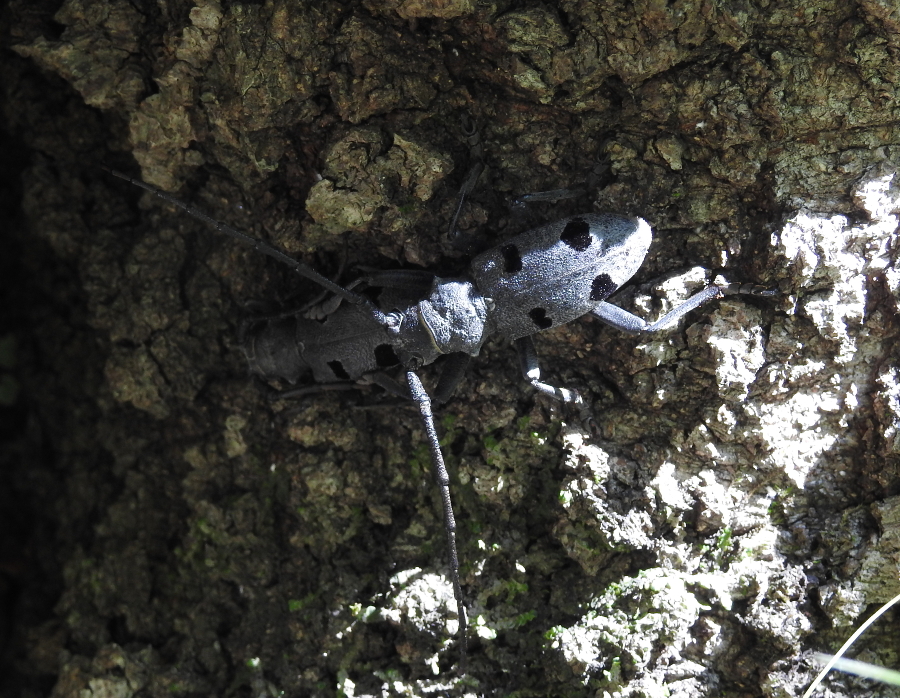
Morimus funereus, Tolminka valley (Triglav National Park).

Dryad Minois dryas, Tolminka valley (Triglav National Park).


Adder Vipera berus, Trenta valley (Triglav National Park).

Peacock Butterfly Inachis io, Trenta valley (Triglav National Park).

Jersey Tiger Euplagia quadripunctaria & Silver-washed Fritillary Argynnis paphia, Trenta valley (Triglav National Park). Both species were frequently encountered, usually feeding on Eupatorium cannabinum (as above).

Soča river in the Trenta valley (Triglav National Park).

Dipper Cinclus cinclus (juvenile), Trenta valley (Triglav National Park).


